Introduction
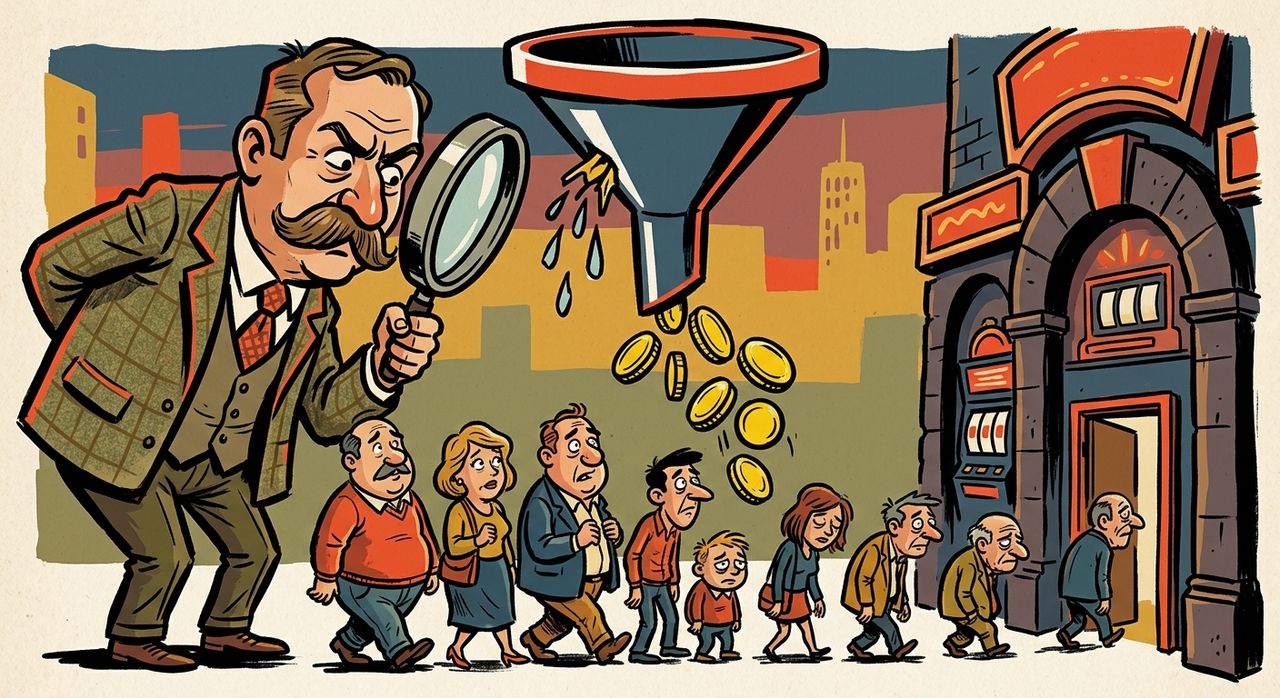
A regulated gaming market can look healthy and still be losing ground. Revenue grows, existing customers spend more, and the headline numbers suggest a maturing sector. Yet the count of first-time players falls.
That pattern is now visible in several European markets. Recent industry reporting highlighted a market where online gambling continued to grow in 2025 while the number of new players declined sharply, prompting warnings that a shrinking pipeline of new customers can push demand towards unlicensed operators.
For iGaming operators and suppliers, the signal matters more than the specific market. Growth that depends on existing customers is not the same as growth that sustains itself.
Why revenue growth can hide a weak funnel
Revenue is a lagging indicator. It reflects the behaviour of players already acquired, not the health of the acquisition engine.
A market can report growth while:
- New player registrations fall year on year. - Acquisition costs rise as competition for a smaller pool intensifies. - Bonus and promotional spend increases to protect activity levels. - Retention becomes the only lever left to defend revenue. - Younger or casual audiences fail to enter the funnel.
At some point the pool of active players ages, churns or reduces spend. Revenue can fall quickly once the underlying pipeline has been weak for several quarters.
What drives a first-time player decline
A fall in new players is rarely caused by a single factor. It usually reflects a combination of regulation, competition and changing consumer behaviour.
Tightening advertising rules
Advertising restrictions, sponsorship bans and stricter bonus rules reduce the reach of licensed brands. If the licensed market becomes harder to find, some demand finds an unlicensed route instead.
A more crowded market
More brands competing for the same audience raises the cost of every registration. Smaller operators can be squeezed out, and the market concentrates around those able to absorb higher acquisition costs.
Affordability and verification friction
Enhanced checks protect players and markets, but poorly designed journeys add friction at the point of sign-up. A registration process that is slow or unclear will lose players who would otherwise have converted.
Changing audience preferences
Product and content preferences shift. If a brand's proposition does not appeal to newer or younger audiences, it will slowly lose relevance even if its existing base remains loyal.
The black market dimension
When a regulated market becomes harder to navigate than an unlicensed one, players can drift. Regulators and operators have warned repeatedly that blanket restrictions can push consumers towards unlicensed operators rather than reducing harm.
This creates a difficult balance. Strong consumer protection is necessary, but it needs to work alongside a licensed market that is visible, competitive and easy to use. If protection narrows the funnel without improving the licensed experience, it can weaken the very market it is meant to protect.
What this means for acquisition strategy
A declining pool of new players changes how growth has to be built. Operators and suppliers that adapt early protect their position.
Move from volume to qualified acquisition
If registrations are scarce, their quality matters more. Acquisition should be measured against player value and long-term contribution, not just cost per registration. Affiliate and paid-media plans should be judged on retained value rather than first-click volume.
Broaden the audience
The same message repeated to the same audience has diminishing returns. A brand can reach new segments through content, community, partnerships and localised propositions rather than relying only on traditional acquisition channels.
Reduce avoidable friction
Every unnecessary step in verification, registration or deposit loses some players. Compliance cannot be removed, but the journey around it can be made clearer, faster and more reassuring.
Strengthen the proposition, not just the offer
Where bonus competition is restricted, the product, brand and experience have to do more of the work. Retention becomes an acquisition asset when players recommend a brand that is genuinely better to use.
Use data to find the gap
A declining first-time player count often hides pockets of opportunity, such as a specific region, demographic or channel that still converts. Segmentation and testing can find where the remaining growth sits.
What this means for suppliers
For B2B suppliers, a tighter funnel in regulated markets changes the sales conversation. Operators need partners who can help them acquire more efficiently, convert better and retain longer, not simply add another product to the stack.
That favours suppliers that can demonstrate measurable impact on acquisition economics, onboarding conversion and player value. It also favours those that help operators stay compliant without making the journey worse for the player.
The benefits of acting early
Operators that respond to a first-time player decline before it shows in revenue have more room to manoeuvre. They can test new channels, refine the proposition and rebalance acquisition spend while the existing base still funds the transition.
Those that wait until revenue starts to fall face a harder problem. They are usually forced to cut costs and increase promotion at the same time, which erodes margin and accelerates the decline.
Conclusion
A first-time player decline is an early warning, not a final verdict. Regulated markets can keep growing for a while on the strength of existing customers, but sustainable growth needs a healthy flow of new ones.
The response is not simply more spend. It is better qualification, a broader audience, less friction, a stronger proposition and a clearer understanding of where the remaining demand sits. Operators that treat the funnel as a commercial asset rather than a marketing metric will be better placed when the market tightens.
Digital Fuel helps iGaming operators, suppliers and specialist businesses read market signals, sharpen acquisition strategy and plan growth with evidence. Explore our [services](/services) or [contact the team](/contact) to discuss what a changing player funnel means for your growth plan.
Ready to put this into practice?
Get in touch